A Quiet Reading Hour for Comic Lists
A quiet reading hour for comic lists helps you hear their rhythm first, then see how a final item changes the meaning of the whole sequence.
Say you have set aside a quiet hour for comic lists: a page of short entries by a writer you already enjoy, a pencil, and no need to finish the book. You read the list once without pausing, then return to notice what its final item has done. The point is not to solve a joke. It is to let the sequence work as a sequence, and to see how a small ending can make the earlier entries sound newly chosen.
This is an invented situation, not a report of anyone’s actual reading. Its usefulness lies in the simple arrangement: one reader, one comic list, two passes. The first pass attends to movement; the second attends to change. The hour can be shortened or stretched, but keeping those purposes separate makes it easier to hear the writing before dissecting it.
Set the hour around one complete list
Choose a list that can be read from beginning to end in one sitting. A compact page in a collection, a column made up of entries, or a self-contained list in a comic essay will do. Avoid opening several books to compare styles. Comparison has its place, but it divides attention before you have learnt the particular rhythm of the piece in front of you.
Make the setting ordinary and comfortable. Put the book or printed page where you can read it without holding a screen full of alerts beside it. Keep a pencil nearby, but leave it down during the first pass. A mug, a chair by a window, or the familiar corner of a library can mark out the occasion; none needs to become a special ritual.
The choice of text matters more than the length of the session. Pick something you can read clearly and whose entries seem to belong together, even if you do not yet know why. If you already know the final line, choose another list: surprise is part of what this particular hour is meant to notice.
Read once for the rhythm before analysing
Begin at the title and move through the entries at a natural pace. Do not stop to explain a phrase, count items, or decide whether each one is funny. Listen instead for how the list advances. Some entries may be clipped; others may carry a little extra weight. A repeated grammatical shape can make the sequence feel steady, while a sudden change in length or register can disturb that steadiness.
Pay attention to the pauses the punctuation invites. A semicolon can hold two thoughts in a more deliberate relation than a comma. A full stop can give an entry the air of a finished declaration. These choices are not rules for laughter, but they affect how the reader travels from one item to the next.
At the end, leave a short silence before turning back. Notice the broad impression the list has made: brisk or languid, orderly or increasingly unruly, dry or buoyant. You need not name every cause. A first reading is most useful when it preserves the movement you actually heard rather than replacing it with an explanation too soon.
For this pass, let the list keep its pace; the pencil can wait.
Return to the entries with a different question
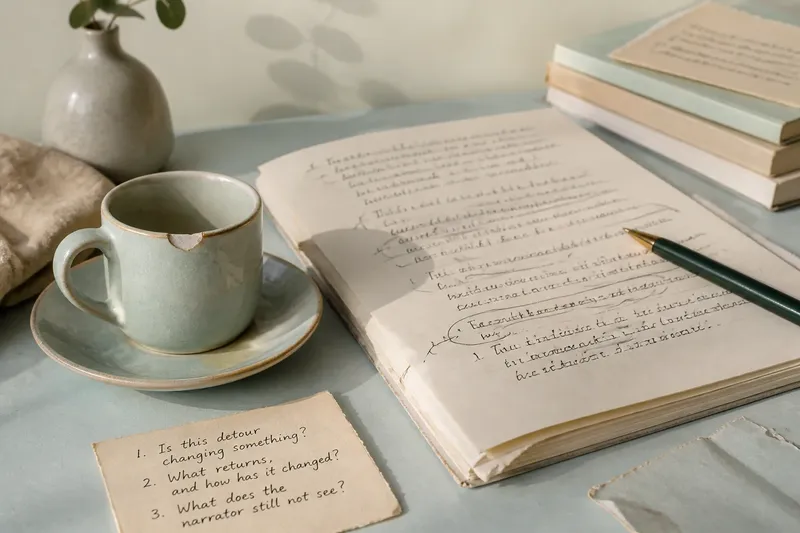
On the second pass, read more slowly. Mark only the places where your sense of the sequence changes: a repeated word, an entry that feels unusually specific, a shift from grand language to a domestic detail, or a phrase that seems to point beyond its own item. The marks are prompts for attention, not a scorecard of jokes.
Now read the final item on its own, then read it again with the preceding entry attached. Ask what it changes. It might turn a list of complaints into a portrait of the complainer. It might make an apparently sensible catalogue sound absurd, or reveal that the earlier entries have been building towards a different subject. Sometimes the ending does not reverse the list at all; it simply makes its pattern easier to recognise.
That distinction matters. A list can finish with a sharp surprise, but it can also end by confirming a rhythm the reader has already felt. The final item’s effect depends on the material before it. A strange last entry will not automatically reshape anything if the earlier sequence has given it no useful expectation to interrupt or fulfil.
Watch what the final item changes
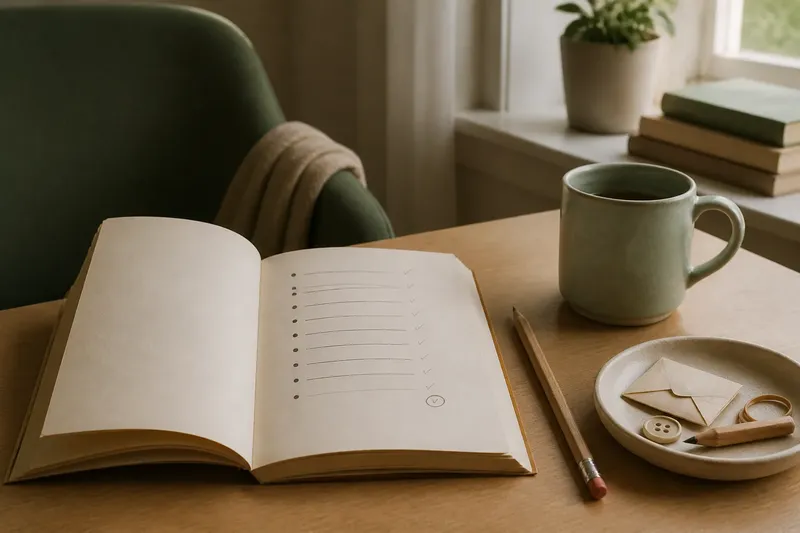
Imagine the page in this invented reading hour contains a list of things a person keeps in a desk drawer: envelopes, a blunt pencil, a rubber band, a spare button, and, last, a handwritten apology addressed to nobody. On the first pass, the entries might sound like a tidy inventory interrupted by an odd private object. On the second, the apology could make the plain objects feel like the contents of someone’s stalled correspondence, shifting the list from household clutter towards an implied story.
The ending has not supplied a full biography, and it would be a mistake to insist that it has. It has changed the reader’s angle on what came before. The envelopes may now seem less incidental; the spare button may remain merely a spare button. That unevenness is part of the pleasure. A final item can cast a new light without making every earlier detail a hidden clue.
In your own reading, try naming the before-and-after impression in plain language. For example: “I thought these were random objects; now they suggest a person avoiding a letter.” Keep the claim modest and tied to the words on the page. If the ending supports several readings, note the alternatives rather than forcing one into place.
What should you listen for on each pass?
How do I hear the rhythm of a comic list?
Read the entries aloud only if the setting allows, or follow their stresses silently. Notice repeated openings, changing sentence lengths, and where punctuation asks you to pause. The aim is to hear the pattern of movement, not to perform the list as though it had a single correct delivery.
Should I mark every joke?
No. Mark a few moments where the sequence shifts or a detail gains new weight. If every entry gets a note, the page becomes an inventory of your reactions and the overall rhythm is harder to see.
What if the last item does not surprise me?
Look for a smaller change: perhaps the ending confirms a pattern, sharpens the narrator’s attitude, or makes the list feel complete. If it does none of these for you, record that response without treating the reading as a failure; not every list depends on a late turn.
How long should I spend on a single list?
Use enough time for one unhurried first reading and one attentive return, then stop when you can describe the effect in a sentence or two. A quiet hour is an occasion, not a quota that every piece must fill.
Draw lessons from the invented reading
In the imagined desk-drawer list, the reader’s first impression is not discarded. It becomes the surface against which the last entry registers. That is the central lesson of the two-pass arrangement: rhythm creates an expectation, while a return reading lets you see whether the ending has altered, completed, or merely interrupted it.
The method also leaves room for uncertainty. A comic list may invite several explanations, and a reader need not settle them all. The more useful observation is often structural: “The entries stay practical until the final one becomes personal,” or “The ending repeats the list’s tone rather than overturning it.” These descriptions stay close to the reading experience and make the writer’s choices visible.
Do not confuse a list’s final item with a punchline that must erase everything before it. The ending may work through contrast, escalation, recognition, or a shift in scale. It may even be funny because it declines to become more extravagant. The reader’s job is not to award the last entry sole credit, but to notice how the earlier items have prepared its arrival.
Afterwards, jot down the title, the rhythm you heard, and the change—or lack of change—you noticed at the end. Keep the note brief. If you return to the piece another day, your description will help you see whether the effect remains stable or whether a different detail now carries the weight.
Let the final note stay small
A quiet reading hour for comic lists works best when it ends with a specific observation rather than a grand verdict. You might write that the list began like a catalogue and ended like a confession, or that its last item made no new turn but gave the repeated phrasing a satisfying finish. Either note records something the page did, not a rule that every comic list must obey.
Then close the book without rushing to find a second example. The pleasure of this occasion is partly in leaving one sequence intact: first heard as movement, then revisited as construction. When a later list catches your eye, you can bring the same attention to it, while allowing its own rhythm and ending to set the terms.