Before the Punchline: The Comic Essay in Print
The comic essay in print can wander before it turns. Learn how page breaks, paragraph rhythm and recurring details shape a delayed comic revelation.
Why does a comic essay in print sometimes seem to circle its joke rather than approach it? The page gives a reader room to pause, glance back and notice a detail that looked ordinary at first. That changes the writer’s task: a detour can earn its place by planting something the reader will recognise differently later.
Print makes earlier details available again
A printed page holds the opening beside the ending in memory, even when many paragraphs lie between them. A reader can also turn back to a phrase or image without leaving the piece. Those features do not make a comic turn work by themselves, but they let a writer build one from recurrence rather than rely on a final punchline alone.
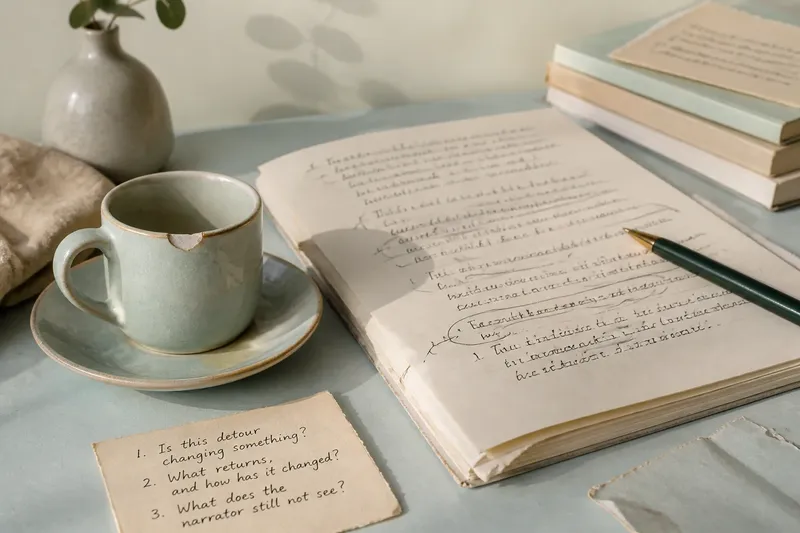
Try giving an object two jobs. At first, a chipped cup might establish the narrator’s fussy concern with appearances. Later, the same cup can expose how readily the narrator invents rules for other people while overlooking their own part in the damage.
On revision, circle the details that return. Keep a return when its meaning has changed; cut it when it merely repeats information.
A digression needs a thread back
A passage can begin with a comic subject and drift into material that never changes how we see it. The voice may stay lively, but the reader loses the sense that the paragraphs belong together. Freedom of movement is not the same as absence of a guiding idea.
In a comic essay, a thought about a leaky umbrella might lead to a theory of personal dignity. The umbrella is more than a prop if the later reflection makes its inconvenience newly revealing. The test is not whether the tangent is amusing on its own; it is whether it alters the essay’s subject, narrator or eventual turn.
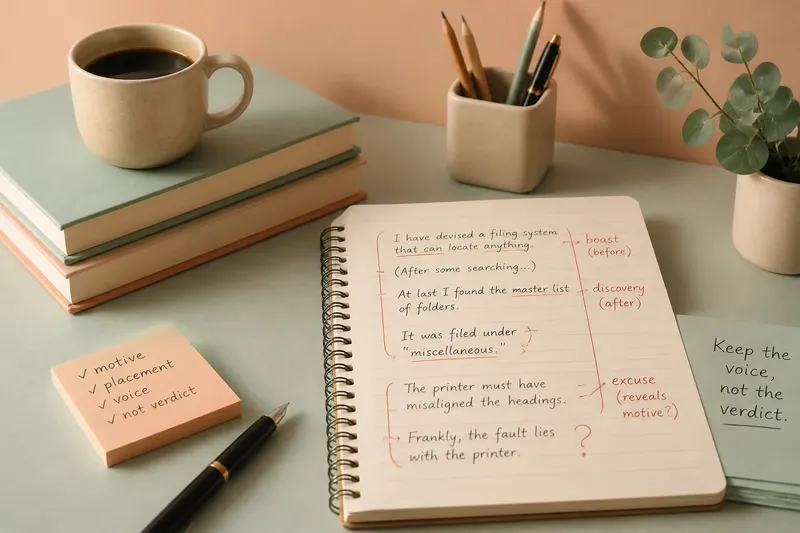
Write a short connecting sentence for each detour. If the connection sounds like an excuse rather than a reason, cut the passage or give it a clearer role.
The essay needs thought as well as comic effects
A draft can become a string of jokes with a little reflection attached. The alternative is not solemnity. It is allowing an idea to develop, with humour emerging from the narrator’s reasoning, the details selected or the gap between confidence and reality.
Readers need to follow a mind at work, even when its conclusions are mischievous. If every paragraph is built to land a separate gag, apparent wandering can feel like a routine in disguise. Give the narrator a genuine question that does not have an immediate answer, then let that question shape what they notice next.
When the piece feels like a string of effects, restore the question that makes the narrator think.
Delay must change the reader’s expectations
A delayed turn loses force if the essay postpones its point without adding pressure. Each stretch should sharpen the question, complicate the narrator’s position or alter the meaning of an earlier image. Otherwise, delay reads as hesitation.
Accumulation gives the reader more of the same; withholding supplies new information while leaving its significance unsettled. A minor domestic annoyance might become the basis for a grand theory, only for the ending to reveal that the narrator’s theory serves their vanity better than it explains the annoyance.
Mark the moment when a reader could predict the turn. If it arrives much later, check each intervening paragraph for a shift in stakes. If none appears, shorten the approach or make the narrator’s confidence more vulnerable.
The ending can trust the page
A writer may weaken a good turn by adding a last sentence that names its meaning. In print, the reader can look back. An earlier image or phrase may acquire comic force at the end without a paragraph explaining the change.
Remove the sentence that interprets the ending and read the final paragraph beside the opening. Keep a clarification only if the reader needs information that the piece has not supplied; do not use it to restate the joke.
How can a printed comic essay make its turn feel earned?
What makes a digression belong in a comic essay?
A digression belongs when it changes the reader’s understanding of the subject, narrator or eventual turn. A lively tangent that changes none of these may belong in another piece.
How can a recurring detail help a comic ending?
A recurring detail helps when its meaning shifts between its first appearance and its return. The ending can then prompt the reader to reconsider the earlier passage rather than explain the connection.
How do you tell whether a delayed turn takes too long?
Check whether the intervening paragraphs add pressure, change perspective or make an earlier detail newly suggestive. If they repeat the premise without changing it, shorten the delay.
Should a comic essay explain its ending?
Usually not if the turn and its earlier clues are legible. A brief clarification can help when the ending depends on information the reader could not reasonably infer, but it should not gloss the joke.
A revision sequence can test each return
Say you have a draft about trying to return a chipped teacup to a shop. The starting material is a complaint, the narrator’s rules for politeness and a closing admission that the cup was chipped at home. First, write the live question: perhaps it is why the narrator trusts their own rules more than their own memory. Next, mark each passage about politeness and keep only those that reveal a new rule or contradiction. Then place the final admission beside the opening and check whether the cup’s first appearance now carries a different implication. The result should be clear: if the return changes the narrator’s apparent authority, keep the route; if not, revise the opening or ending before polishing the jokes.
- Observation: A paragraph introduces a detail that never returns or changes the argument. If it adds neither, then cut it; otherwise connect it to a later shift.
- Observation: Two neighbouring paragraphs make the same point about politeness. If the second adds no contradiction, then remove it; otherwise keep the sharper version of the pair.
- Observation: A recurring object returns with the same meaning. If its meaning has not changed, then revise the return or remove it; otherwise retain it as a cue for recognition.
- Observation: Several paragraphs postpone the turn without changing the stakes. If they only repeat the premise, then shorten the approach; otherwise keep the paragraphs that make the narrator’s position less secure.
- Observation: The ending depends on information absent from the earlier pages. If that information is essential, then plant a clue earlier; otherwise simplify the turn so the reader can follow it.
- Observation: A final sentence explains a joke the preceding lines already make clear. If the meaning survives without it, then cut the sentence; otherwise retain only the information needed to understand the turn.
These checks make the essay’s apparent looseness answerable to the page. A reader need not see the plan, but should be able to feel that a returning detail has changed and that the detours helped make that change possible.
The printed essay can make a return part of the joke
There is no need to treat print as a single tradition with fixed rules. For this form, its particular advantage is practical: a phrase can linger in memory, an image can recur, and the reader can revisit the opening after the ending. The comic essay in print can use those conditions to make recognition part of the humour.
Revise the route rather than forcing every paragraph towards a punchline. Keep the details that shift the reader’s view, and let the final return supply the last useful change in perspective.